Need TV Repair Services in Nairobi?
Certified technicians dispatched to you — same day.
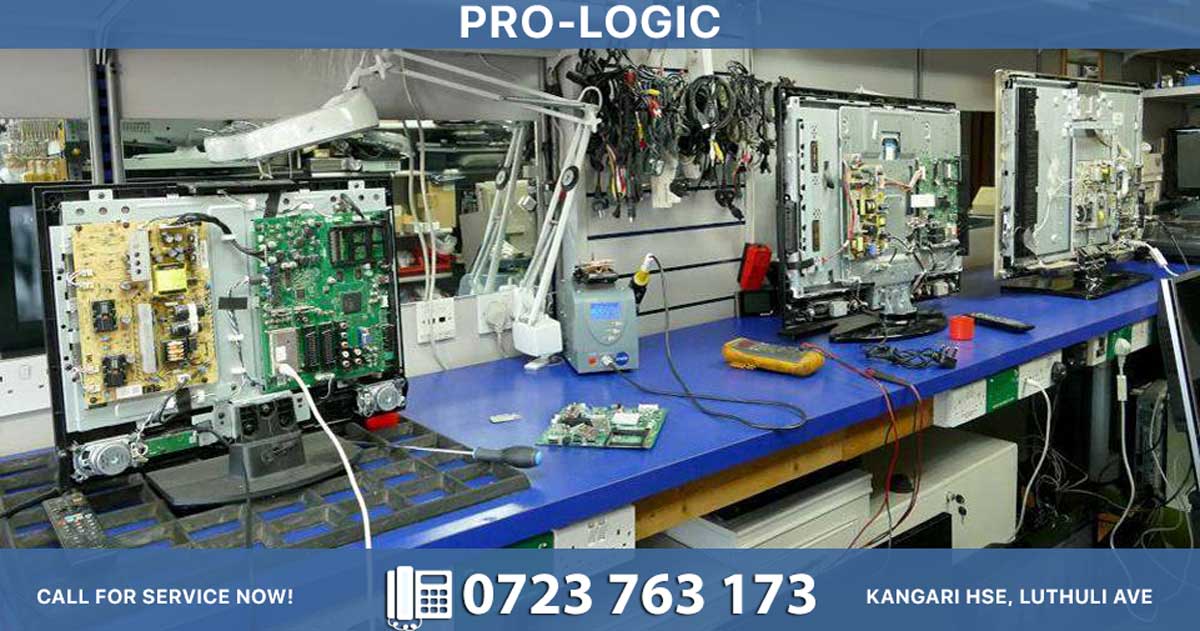
20 Common TV Faults: Causes and Where to Fix Them in Nairobi
1. Causes of Audio Cutting Out Intermittently on TVs and Where to Fix in Nairobi
Few television faults are as frustrating as sound that drops in and out without warning. One moment the dialogue is clear, and the next the audio vanishes, returning seconds later or remaining silent until the set is restarted. In Nairobi homes, where streaming, gaming, and satellite viewing are everyday activities, intermittent audio loss is among the most frequently reported TV problems. Identifying the root cause is the first step toward a permanent solution.
Common Causes of Intermittent Audio Loss
-
Loose or damaged audio connections. Worn HDMI ports, frayed cables, or loosely seated optical and RCA connectors frequently interrupt the audio signal while the picture remains intact. Vibrations from speakers or even walking across the floor can disturb an already weak connection.
-
Failing capacitors on the audio circuit. The audio amplifier section of the main board depends on stable power. Capacitors that have aged or bulged deliver inconsistent current, causing the sound to cut out intermittently before eventually failing altogether.
-
Software glitches. Smart televisions run complex audio-processing software. Bugs in firmware, especially after updates, can mute sound randomly. A factory reset or reinstalling the firmware often reveals whether the fault is software-related.
-
Overheating audio amplifier. When ventilation is poor, the amplifier chip heats up and temporarily shuts down to protect itself. Once it cools, sound returns, creating an on-off cycle that worsens over time.
-
Speaker damage. Blown or partially damaged speakers produce crackling before failing, and intermittent sound can be an early symptom of a speaker coil breaking down.
-
External device conflict. Soundbars, decoders, and home theatre systems connected through HDMI can create handshake conflicts that interrupt audio. Testing the TV with built-in apps isolates whether the fault lies with an external device or the television itself.
Where to Fix Intermittent Audio Loss in Nairobi
Where home checks such as reseating cables, performing a factory reset, and testing different sources do not resolve the fault, internal repair by qualified technicians is required. Nairobi residents can rely on televisionrepair.co.ke, a trusted TV repair workshop located on Luthuli Avenue in the heart of Nairobi's electronics district. Their experienced technicians diagnose audio circuits, replace failing capacitors, repair amplifier sections, and install genuine replacement speakers across all major brands, including Samsung, LG, Sony, TCL, Hisense, and Panasonic. Services are offered at reasonable prices with a fast turnaround. To book a diagnosis or inquire about audio repair costs, call 0723763173 today.
Prevention and Maintenance Tips for TV Audio
To keep your television audio reliable, take a few simple precautions. Use high quality HDMI cables with firm, fully seated connectors, and avoid placing heavy objects on top of the set where they can press against ports. Keep the volume below maximum to spare the amplifier and speakers, and protect the television with a surge protector to shield the audio circuits from grid fluctuations common in Nairobi. Dust the vents regularly so the amplifier does not overheat, and install firmware updates promptly when the manufacturer releases them. If you notice crackling, early cut-outs, or low volume on one channel only, seek diagnosis quickly, because audio faults caught early are usually cheaper to repair. Televisions that have served for several years benefit from a general service, which includes cleaning the boards and testing the power supply. Residents of Nairobi and the surrounding areas can obtain this preventive service affordably, and timely attention to small audio faults prevents the far higher cost of a complete main board replacement later.
2. Causes of No Sound But Picture Works on TVs and Where to Fix in Nairobi
A television that displays a perfect picture but produces no sound at all is a surprisingly common complaint. The screen works, the menus open, and the channels tune normally, yet the audio is completely absent. This fault can affect any brand and any model, from compact bedroom sets to large smart displays in Nairobi living rooms. Understanding why the sound has disappeared helps determine whether a settings adjustment or a hardware repair is needed.
Common Causes of Total Audio Failure
-
Accidental audio settings. The most frequent culprit is simply a muted set, an incorrectly chosen sound output, or audio routed to an external output such as Bluetooth or S-PDIF. Checking the sound menu and selecting TV speakers as the output resolves many cases instantly.
-
Failed audio amplifier. The amplifier chip on the main board converts digital audio into signals the speakers can play. When it fails, the picture remains perfect while sound disappears entirely. This is a board-level repair requiring professional diagnosis.
-
Damaged speakers. Both speakers failing simultaneously is rare, but a blown speaker circuit or broken internal wiring can silence the entire audio path.
-
Firmware corruption. Corrupted firmware can disable the audio subsystem while leaving video untouched. Updating or reinstalling the firmware through the settings menu sometimes restores sound.
-
Software conflict after an update. Occasionally, a system update changes audio output defaults. A factory reset returns the set to known-good settings.
-
Main board faults. The audio processor on the main board can fail from power surges, which are common on parts of the Kenyan grid. Surge-damaged boards often lose audio function while video circuits survive.
Where to Fix No-Sound TV Faults in Nairobi
If checking the mute function, sound output settings, performing a reset, and testing different channels and inputs does not restore audio, the television requires professional attention. For Nairobi residents, televisionrepair.co.ke offers dependable diagnosis and repair of complete audio failure on all major television brands. The workshop is located on Luthuli Avenue, Nairobi, within the well-known electronics repair hub, where walk-in consultations are welcome. Technicians there handle amplifier repair, main board replacement, speaker replacement, and firmware reinstallation using genuine parts at reasonable prices. To schedule a repair or receive a cost estimate, call 0723763173.
Quick Checks Before Calling a Technician
Before concluding the audio system has failed, work through a short checklist that costs nothing. Confirm that the volume is not muted and that the audio output is set to TV speakers rather than Bluetooth, optical, or an external amplifier. Test several channels and at least two different sources, such as the decoder, a streaming app, and a USB drive, to see whether the silence follows one input or affects everything. Switch off any connected soundbar and unpair forgotten Bluetooth devices, which sometimes hijack the audio output silently. Perform a soft restart by unplugging the set for ten minutes, and if the problem persists, perform a factory reset from the settings menu. Take note of when the fault started, since a failure that began immediately after a storm or a power cut strongly suggests surge damage to the audio circuitry. Recording these details helps a technician diagnose faster and reduces your repair cost, because the number of tests required in the workshop drops considerably when symptoms are described accurately.
3. Causes of Picture But Distorted Audio on TVs and Where to Fix in Nairobi
Distorted audio, where the picture is clear but the sound is crackling, buzzing, muffled, or garbled, can make even the best television unpleasant to watch. Many Nairobi households first notice the problem during news broadcasts or dialogue-heavy programmes, when voices sound harsh or robotic. Unlike complete audio loss, distortion points to a signal that is still present but being processed or reproduced incorrectly.
Common Causes of Distorted Sound
-
Blown or deteriorating speakers. The most common cause is physical speaker damage. When the speaker cone or coil deteriorates, sound becomes crackly at normal volumes and progressively worse as volume increases.
-
Excessive volume levels. Sustained playback at maximum volume overloads the speakers and amplifier, producing permanent distortion. If sound clears at low volume but distorts when loud, the speakers are likely damaged.
-
Faulty audio processing settings. Equaliser presets, surround sound modes, or bass boost features set too aggressively can clip the audio signal, creating an unpleasant distorted output.
-
Bad signal source. A weak decoder signal, poor aerial reception, or a low-quality stream can deliver distorted audio to the TV. Testing a different source confirms whether the TV or the signal is at fault.
-
Amplifier circuit faults. Damaged components within the amplifier stage distort the waveform before it reaches the speakers, producing garbled output regardless of source or volume.
-
Loose internal audio connections. Ribbon cables and solder joints inside the television can degrade, partially interrupting the audio signal and producing intermittent crackling and buzzing.
Where to Fix Distorted TV Audio in Nairobi
Where adjusting settings, reducing volume, and testing alternative sources do not eliminate the distortion, internal components require professional repair. Television owners in Nairobi should contact televisionrepair.co.ke, a reputable workshop on Luthuli Avenue specialising in audio faults on all major brands, including Samsung, LG, Sony, TCL, and Hisense. Their technicians accurately distinguish between speaker damage and amplifier faults, replace speakers with genuine compatible units, and repair main board audio sections at reasonable prices. Residents across Nairobi can visit the workshop or call 0723763173 to book a diagnosis.
How Distorted Audio Is Diagnosed Professionally
Accurate diagnosis separates speaker faults from board faults, and the difference matters because the repairs differ in cost. In the workshop, technicians first play a known good audio source through the set and listen at low and high volume. If distortion appears at all volumes, the fault typically lies in the amplifier or main board; if it appears only at high volume, the speakers are usually to blame. The next step is measuring the amplifier output with test equipment to detect clipped or unstable waveforms, followed by an internal inspection for bulging capacitors, discoloured components, and cracked solder joints on the audio section. Where the speaker cones are suspected, they are inspected for tears, stiffened suspensions, and corrosion on the terminals. Owners should avoid repeatedly increasing the volume to overcome distortion, because doing so accelerates damage to both the speakers and the amplifier. Nairobi television owners who bring their sets in early, before the distortion spreads to the video circuits, generally enjoy lower repair bills and a faster turnaround on all major brands.
4. Causes of a TV Remote Responding Slowly or Erratically and Where to Fix in Nairobi
A remote control that responds slowly, intermittently, or not at all is a daily irritation. You press a button and nothing happens, press again, and the television suddenly executes every command at once. In many Nairobi homes, remotes are used constantly for channel surfing, streaming navigation, and volume control, so erratic behaviour quickly becomes intolerable. Determining whether the problem lies with the remote, the television, or the environment solves half the puzzle.
Common Causes of Slow or Erratic Remote Behaviour
-
Weak batteries. The single most common cause is exhausted batteries. Weak cells reduce the infrared or Bluetooth signal strength, forcing multiple presses before the command registers.
-
Obstructed infrared path. Infrared remotes require a clear line of sight to the sensor. Dust on the sensor, decorative items, soundbar placement, or bright sunlight striking the sensor can delay or block commands.
-
Corroded battery contacts. Leaking batteries leave corrosion on the contacts, increasing resistance and causing intermittent operation. Cleaning the contacts with spirit and a dry cloth often restores normal function.
-
Interference from other devices. LED lighting, fluorescent tubes, and other remotes in the room emit infrared noise that confuses the television's sensor, delaying command recognition.
-
Remote control circuit failure. A cracked internal circuit board, damaged keypad membrane, or failed transmitter LED causes buttons to work inconsistently or only when pressed very hard.
-
Television sensor or software faults. A failing infrared receiver inside the TV, or a software bug consuming processor resources, can also make the set respond sluggishly even with a healthy remote.
Where to Fix Remote and Sensor Faults in Nairobi
Begin with fresh batteries, a contact cleaning, and a direct line-of-sight test. If the remote still misbehaves, test with a phone camera: a working remote shows a flashing light through the camera when buttons are pressed. Should the fault persist with a known good remote, the television's sensor or software requires professional repair. Nairobi residents can rely on televisionrepair.co.ke, located on Luthuli Avenue, for remote control repairs, sensor replacement, and television software diagnostics across all major brands. Their technicians offer remote repairs and genuine replacement remotes at reasonable prices. Call 0723763173 to book a service.
Keeping Your Remote and Sensor Working Reliably
Remote controls respond best to a small amount of routine care. Replace batteries as soon as responsiveness slows rather than waiting for total failure, and always replace both cells together with a matched pair. If a remote has been dropped, opened, or exposed to moisture, have it inspected before internal corrosion sets in, because oxidised circuits are far harder to revive than clean ones. Keep the television's infrared sensor window free of dust, and avoid mounting the set where direct sunlight falls across the sensor, since strong daylight blinds it just as effectively as a physical obstruction. Where a soundbar or decoder sits in front of the television, position it below the sensor's line of sight. Households with children should check for jammed buttons and spilled liquids, the two most common causes of erratic remote behaviour after battery problems. If a replacement remote is ever required, insist on a genuine or fully compatible unit matched to your television model, because universal remotes frequently leave menu and smart functions inaccessible, limiting what the set can do.
5. Causes of HDMI and USB Ports Stopping Working on TVs and Where to Fix in Nairobi
When HDMI or USB ports stop working, a television loses its connection to decoders, gaming consoles, laptops, streaming devices, and hard drives. Many Nairobi households discover the fault when a decoder shows no signal or a recorded movie on a flash drive fails to load. Ports can fail one at a time or all at once, and the underlying causes range from trivial to serious.
Common Causes of Port Failure
-
Damaged port from repeated insertion. HDMI ports endure frequent plugging and unplugging. Worn internal contacts, bent pins, or a physically loose port cause intermittent connection failures.
-
Power surge damage. Voltage spikes, common during storms and grid instability, frequently destroy the port controller circuitry on the main board while leaving other functions intact.
-
Firmware or software glitches. Software bugs can disable port detection, making the TV fail to recognise connected devices. A firmware update or factory reset often restores function.
-
Overloaded USB ports. USB ports supply limited power. Connecting power-hungry devices such as external hard drives can overload and disable a port, sometimes permanently.
-
Main board failure. The HDMI and USB circuitry is integrated into the main board. When the port controller chip fails, all ports may stop working simultaneously, requiring board-level repair or replacement.
-
Dust and debris. Accumulated dust inside ports prevents proper contact. Careful cleaning with compressed air occasionally restores a port thought to be dead.
Where to Fix Failed HDMI and USB Ports in Nairobi
First test each port with different cables and devices, perform a firmware update, and try a factory reset. If the ports remain unresponsive, the fault is internal and requires professional diagnosis. Nairobi residents should contact televisionrepair.co.ke, a trusted workshop on Luthuli Avenue. Their skilled technicians repair and replace HDMI ports, USB ports, and main board controller circuitry for all major brands, including Samsung, LG, Sony, TCL, and Hisense, using genuine parts at reasonable prices. Call 0723763173 to arrange a diagnosis or visit the workshop on Luthuli Avenue, Nairobi.
Protecting Your TV Ports from Damage
Port damage is largely preventable with careful habits. Insert and remove HDMI and USB connectors gently and only when the devices are powered down where possible, and never force a plug that resists, because the internal solder joints of a port are far more fragile than the cable end. Avoid hanging heavy devices such as external hard drives directly from the ports; support them on a surface instead, since the weight gradually cracks the port solder on the main board, one of the most common port killers technicians encounter. Keep cables dressed neatly so that nobody trips on them, and use a surge protector on every television, because a single grid surge can destroy all the ports on a board at once. Dust the connection area periodically, and in dusty environments keep unused ports covered. Where one port has already failed, resist the temptation to keep wiggling plugs inside it, which worsens the damage and can crack the main board traces. Early professional port replacement or re-soldering is inexpensive compared with a whole main board replacement after multiple ports have been torn from the board.
6. Causes of Wi-Fi and Smart Features Failing on TVs and Where to Fix in Nairobi
Smart televisions depend on reliable Wi-Fi connections to deliver Netflix, YouTube, Showmax, and browsing. When the Wi-Fi disconnects repeatedly, the smart platform freezes, or the set forgets networks entirely, the television is reduced to an ordinary display. This fault is increasingly reported in Nairobi as streaming overtakes traditional broadcasting in many households.
Common Causes of Wi-Fi and Smart Feature Failure
-
Router or network issues. Before blaming the TV, restart the router and check whether other devices connect normally. ISP outages and weak signal coverage in some Nairobi homes frequently masquerade as TV faults.
-
Wi-Fi module failure. The internal wireless module can fail from heat stress or power surges, causing the television to detect no networks at all or to disconnect constantly.
-
Firmware corruption. Smart platforms rely heavily on software. Corrupted firmware can break network drivers, and only a firmware update or reinstallation cures the fault.
-
Overheating. Poor ventilation around the television, especially sets mounted flat against walls, stresses the Wi-Fi module and the smart processor, producing unstable connections that worsen over time.
-
Memory overload. Insufficient storage, filled with installed apps and cached data, causes the smart platform to misbehave, including unstable network connectivity. Clearing cache and uninstalling unused apps frequently helps.
-
Main board faults. Because the Wi-Fi module and smart processing share the main board, board-level component failure can knock out smart features entirely.
Where to Fix Smart TV Wi-Fi Faults in Nairobi
Try restarting the router, reinstalling firmware, clearing the app cache, and performing a factory reset. If the television still cannot maintain a connection or detect networks, internal repair is required. Nairobi residents should contact televisionrepair.co.ke, located on Luthuli Avenue, where experienced technicians diagnose and repair Wi-Fi modules, smart platform software, and main board faults on all major brands. Genuine replacement modules are installed at reasonable prices, and both Samsung, LG, Sony, TCL, and Hisense sets are well catered for. Call 0723763173 for a booking or cost estimate.
Keeping Smart TV Connectivity Stable
Stable smart features depend on both the network and the television being in good condition. Position your router centrally and close to the television where possible, because thick walls and distance weaken Wi-Fi noticeably. Restart both the router and the television periodically to clear stalled connections, and keep firmware updated, since manufacturers continually patch network stability bugs. Limit the number of simultaneously streaming devices on the network where bandwidth is modest, and clear the television's app cache monthly to keep the smart platform responsive. Mount televisions with a few centimetres of clearance behind them so the Wi-Fi module and smart processor are not cooked by trapped heat, a surprisingly common cause of dropping connections in wall-mounted sets. During storms, unplug the television, because surges travel through both power and network paths and can destroy the wireless module. Where the television still drops Wi-Fi with everything else healthy, the internal module or antenna may need professional replacement, and Nairobi owners can have this diagnosed affordably rather than replacing an otherwise healthy set.
7. Causes of Smart TV Apps Crashing Constantly and Where to Fix in Nairobi
Few things disrupt an evening of streaming like applications that crash repeatedly. You open Netflix or YouTube, the logo appears, and moments later the app closes and returns you to the home screen. For Nairobi households that rely on smart platforms for entertainment, constant app crashes are a serious inconvenience with several possible explanations.
Common Causes of App Crashes
-
Insufficient memory. Smart televisions have limited RAM and storage. When too many applications are installed or background processes accumulate, apps run out of memory and close unexpectedly. Uninstalling unused apps and clearing the cache usually improves stability.
-
Outdated app versions. Applications are updated to match new platforms. Running an old app version on updated firmware, or vice versa, creates incompatibilities that trigger crashes. Updating apps through the TV's store often resolves the issue.
-
Firmware problems. Corrupted or outdated system software is a leading cause of app instability. Installing the latest firmware, or reinstalling the current version, frequently cures persistent crashing.
-
Weak network conditions. Apps that fail to stream smoothly can close when the connection drops mid-session. Testing the TV on a different network isolates whether connectivity is the culprit.
-
Storage failure. The internal storage chip on the main board can develop bad sectors, particularly after power interruptions. When the system cannot reliably read app data, applications crash regardless of updates or resets.
-
Main board deterioration. Overheating and power surges gradually damage the smart processing circuitry, causing the entire platform, not just individual apps, to become unstable.
Where to Fix Crashing Smart TV Platforms in Nairobi
Start with basic housekeeping: update firmware, update each app, clear caches, uninstall unused applications, and perform a factory reset. If crashes continue despite a clean system, the fault is internal, usually storage or board-level, and requires professional repair. Nairobi residents can depend on televisionrepair.co.ke on Luthuli Avenue for expert diagnosis of smart platform faults. Technicians repair storage chips, main board components, and system software across all major brands, using genuine parts and charging reasonable prices. Call 0723763173 to book a diagnosis or visit the workshop on Luthuli Avenue, Nairobi.
Preventing App Crashes on Smart TVs
A smart platform stays healthy with the same care a phone or computer needs. Update the television firmware and each application as soon as updates appear, because developers fix the very bugs that cause crashes. Uninstall apps you no longer use, since storage pressure is a leading cause of instability, and clear the cache of heavy applications such as streaming services every few weeks. Restart the television fully at least once a week rather than leaving it perpetually on standby, because a fresh boot clears accumulated memory that slows the platform. Keep the set cool and its vents clear, since an overheated processor crashes apps just as a stressed computer freezes. Where electricity supply is unstable, use a surge protector, because firmware corruption caused by interrupted updates during power cuts is a leading trigger of crash loops that only a workshop reinstallation can cure. Finally, note which apps crash and under what conditions, since a pattern confined to one app points to that application, while crashes across every app point to the system itself and merit professional diagnosis before the storage chip deteriorates further.
8. Causes of Frozen Menus and Interface on TVs and Where to Fix in Nairobi
A television whose menus freeze mid-scroll, whose remote commands go unregistered, or whose home screen locks up entirely is effectively unusable. Frozen interfaces are a common complaint among smart TV owners in Nairobi, and while the fault sometimes looks severe, its causes range from simple software congestion to genuine hardware failure.
Common Causes of a Frozen TV Interface
-
Software overload. Smart TVs juggle multiple background processes. Excessive installed apps, accumulated cache, and pending updates can exhaust the system memory, freezing the interface. A restart and a cache clear often restore normal operation.
-
Firmware corruption. Interrupted updates, caused by power cuts or dropped connections, corrupt system files and leave the platform unstable or entirely unresponsive.
-
Overheating. Televisions confined in cabinets or mounted flush against walls trap heat. Excessive internal temperatures throttle the processor, producing sluggish menus that eventually freeze altogether.
-
Main board failure. The processor and memory that drive the interface live on the main board. Ageing capacitors, surge damage, or a failing processor cause recurring freezes that no amount of resetting will cure.
-
Remote or sensor issues. Occasionally the interface is fine but appears frozen because the infrared sensor or remote has failed. Checking whether physical buttons on the set itself respond distinguishes the two situations.
-
Storage faults. Failing internal storage slows every operation, from opening menus to launching apps, before the system eventually locks up.
Where to Fix a Frozen TV Interface in Nairobi
Begin with a restart, a firmware update, a cache clear, and finally a factory reset. If the interface still freezes, the fault lies within the hardware and should be inspected by professionals. For Nairobi residents, televisionrepair.co.ke on Luthuli Avenue offers expert diagnosis and repair of frozen interfaces, including main board repair, storage replacement, and firmware reinstallation for all major brands. Their technicians serve Samsung, LG, Sony, TCL, and Hisense sets at reasonable prices with quick turnaround. Call 0723763173 for an appointment or walk in today.
Preventing Interface Freezes and Slow Menus
A responsive interface begins with disciplined software habits. Keep only the applications you actively use, uninstall the rest, and clear cached data periodically so the limited internal memory is never exhausted. Install firmware updates promptly, and never interrupt an update by switching off the power, because a corrupted system image is the most common cause of a completely frozen smart platform. Restart the television weekly to reset memory fragmentation, and avoid pressing rapid sequences of remote commands, which queue up and strain the processor. Give the set breathing space: at least ten centimetres of clearance around the vents, and no enclosure that traps warm air, because heat is the silent enemy of smooth performance. On wall installations, ensure the mount does not block rear vents. If freezing has already become frequent, stop performing further factory resets, since repeated resets cannot cure a hardware fault and occasionally worsen storage corruption. Instead, bring the set for diagnosis while it still boots, because a television that reaches the workshop running is faster and cheaper to repair than one that arrives completely locked up.
9. Causes of TV Overheating and Excessive Heat from Vents and Where to Fix in Nairobi
All televisions generate warmth, but a set that blows noticeably hot air from its vents, feels hot to the touch at the frame, or shuts itself down is overheating. Nairobi's ambient temperatures, combined with common installation habits, make this a frequent fault, and ignoring it shortens the life of nearly every internal component.
Common Causes of Overheating
-
Blocked ventilation. The leading cause is poor airflow. Sets enclosed in tight cabinets, mounted flush against walls, or crowded by soundbars and decoders cannot expel heat, causing internal temperatures to climb dangerously.
-
Dust accumulation. Dust settles on vents, boards, and heat sinks, insulating components and clogging cooling paths. Regular gentle cleaning of the vents materially reduces operating temperature.
-
Prolonged continuous operation. Televisions left running for many hours daily, a common practice in hospitality settings, accumulate heat that stresses capacitors and processors over time.
-
Failing internal components. Ageing capacitors and stressed power boards draw more current and run hotter, creating a self-reinforcing cycle in which heat accelerates component decline.
-
Backlight stress. At maximum brightness settings, LED backlights generate substantial heat. Continuous high brightness both raises temperature and shortens backlight life.
-
Failed thermal management. Thermal pads and adhesive between chips and heat sinks dry out over years, sharply reducing heat transfer and causing localised overheating of the processor.
Where to Fix an Overheating TV in Nairobi
Immediately improve ventilation, clean the vents, reduce brightness, and avoid marathon viewing sessions. If the television still runs excessively hot, smells unusual, or shuts down, internal inspection is necessary before permanent damage occurs. Nairobi residents should contact televisionrepair.co.ke, the trusted repair workshop on Luthuli Avenue, where technicians clean internal boards, replace degraded thermal materials, repair power boards, and service overheating sets of every major brand at reasonable prices. Call 0723763173 to arrange a service and protect your television today.
Preventing TV Overheating
Overheating is the most preventable fault on this list, and prevention costs nothing. Install the television with generous clearance on all sides, never flush against a wall, and never inside a closed cabinet without ventilation openings. Keep the vents free of dust with regular gentle cleaning, and avoid placing the set near heat sources such as radiators, cookers, or windows that receive strong afternoon sun. Reduce the default brightness from the showroom maximum to a comfortable level, because backlight output is the largest single heat contributor inside a modern television. Power the set off completely rather than leaving it in standby for long unwatched periods, and during extended heat, allow rest intervals on particularly hot afternoons. In dusty environments, an annual internal cleaning in the workshop removes the insulating layer of dust that gradually cooks capacitors and processors. Because excessive heat also dries out solder joints and thermal compounds, a cool-running set fails far less often, and disciplined ventilation combined with regular cleaning is the cheapest insurance any television owner can buy. Nairobi households that adopt these habits routinely see their televisions serve for many additional years, whereas neglected, overheating sets typically arrive for power board and backlight repairs far sooner than their owners expected.
10. Causes of a Burning Smell from a TV and Where to Fix in Nairobi
A burning smell from a television should never be ignored. Unlike minor faults that can wait, this symptom indicates that something inside the set is actively overheating, melting, or on the verge of catching fire. Nairobi residents who notice this smell should switch the television off at the wall immediately and seek professional diagnosis before switching it on again.
Common Causes of a Burning Smell
-
Failing power supply capacitors. Electrolytic capacitors age, bulge, and eventually leak or burst. The acrid, chemical smell that results is one of the earliest warning signs of power board failure.
-
Overheating transformers and coils. The standby transformer and inverter coils can overheat when their insulation degrades, producing a hot, varnish-like odour before complete failure.
-
Dust ignition risk. Thick dust layers inside a television, combined with electrical heat, can scorch and smoulder, giving off a burnt smell well before any visible damage appears.
-
Short circuits on the main board. Component shorts, often triggered by power surges during storms or grid fluctuations, generate intense localised heat that scorches nearby plastic and solder.
-
Failed backlight LED strips. Overdriven or failing LEDs scorch their mounting surfaces, releasing a distinctive smell that accompanies flickering or dark patches on the screen.
-
Melted wiring insulation. Internal wiring heated by poor ventilation or overloaded circuits melts its insulation, creating both the burning odour and a genuine fire hazard.
Where to Fix a Burning-Smell TV Fault in Nairobi
Do not continue using the set. Unplug it and have it inspected before any further operation. Nairobi residents should contact televisionrepair.co.ke, the professional repair workshop on Luthuli Avenue. Their experienced technicians safely open, clean, and diagnose overheating sets, replace bulging capacitors, repair scorched boards, and restore televisions to safe working order using genuine parts at reasonable prices. All major brands are handled, including Samsung, LG, Sony, TCL, and Hisense. For urgent inspection, call 0723763173 or visit the workshop on Luthuli Avenue, Nairobi.
Fire Safety and Prevention for TV Faults
Because a burning smell carries genuine fire risk, prevention deserves serious attention. Always connect the television through a quality surge protector, and during storms unplug it entirely, since surges on the Kenyan grid remain a leading cause of scorched power boards. Never route cables under carpets or furniture where damage goes unseen, and inspect plugs and sockets annually for discolouration, which is an early sign of overheating connections. Keep the area around the set clear of fabrics, papers, and curtains that could ignite, and leave the vents uncovered at all times. Avoid cheap extension multi-blocks loaded with many appliances on one socket, because overloaded connections generate heat at the plug long before any fault appears inside the television. Have ageing sets inspected preventively, especially those over five years old, since the capacitors and transformers most prone to burning out decline predictably with age. Households that notice any smell of burning should treat it as a stop-now signal: unplug immediately, do not test the set repeatedly, and book an inspection, because early intervention is cheap while a fire is not.
11. Causes of a Chemical or Plastic Odour from a TV and Where to Fix in Nairobi
A chemical or plastic smell from a television is distinct from ordinary electronic warmth. New sets sometimes emit a mild odour for the first days of use, but a persistent, sharp, or sweet chemical smell from an older set signals that plastics, insulation, or board coatings are being overheated. Nairobi households that notice such odours should treat the matter seriously.
Common Causes of Chemical or Plastic Odours
-
New-set off-gassing. Freshly purchased televisions often release a faint plastic smell as manufacturing residues warm and evaporate. This fades within a week and is harmless, provided it is faint and the set runs cool.
-
Overheating plastic components. Internal brackets, cable insulation, and board coatings release distinctive odours when heated beyond their design limits, usually because of blocked vents or prolonged high brightness.
-
Leaking capacitors. Burst electrolytic capacitors emit a sharp, fishy, or ammonia-like chemical smell. This is a definitive sign of power board failure requiring immediate professional attention.
-
Degrading transformer varnish. The insulation varnish on transformers and inductor coils breaks down under sustained heat, giving off a hot, sweet, chemical scent.
-
Electrical arcing. Micro-arcing between loose connections or cracked solder joints scorches surrounding plastic, producing intermittent whiffs of burnt chemical odour, often accompanied by crackling sounds.
-
Adhesive and thermal pad breakdown. Thermal compounds behind processors and heat sinks degrade over years, and the resulting smells often accompany unstable operation and random shutdowns.
Where to Fix Chemical Odour Faults in Nairobi
Switch the television off at the socket and allow it to cool. If the smell is faint and the set is new, monitor it for a few days. For any persistent, sharp, or worsening odour, professional inspection is essential. Nairobi residents should contact televisionrepair.co.ke on Luthuli Avenue, where qualified technicians open, clean, and test television boards, replace failed capacitors and transformers, and correct overheating conditions. All major brands, including Samsung, LG, Sony, TCL, and Hisense, are serviced with genuine parts at reasonable prices. Call 0723763173 to book an inspection and use your television safely again.
Preventing Chemical and Plastic Odours in TVs
Preventing chemical smells means preventing the heat and electrical stress that produce them. Ventilate the television properly with clear space around the vents, and keep brightness moderate so the backlight and power board run cool. Use a surge protector on every set, since surge-damaged components run hotter even when they continue working, and the first evidence is often a faint warm chemical smell before outright failure. Keep liquids, sprays, and damp cloths away from vents, and dust the exterior regularly. Inspect the plug and socket for heat marks annually, and never operate a television that has been stored in a damp place until it has fully dried out. If you own a new set, allow the faint new-plastic smell a week to clear, but stay alert for any smell that is sharp, sweet, or worsening, which indicates active internal stress rather than harmless off-gassing. The most valuable habit is simply paying attention: odours are the earliest warnings the television ever gives, and acting on them promptly turns a potential board replacement into a cheap component-level repair.
12. Causes of Static Electricity Shocks from a TV Frame and Where to Fix in Nairobi
Touching the television frame and receiving a small static shock is more than an unpleasant surprise. Repeated shocks from the chassis indicate an earthing or leakage problem that, while usually minor, can escalate and damage sensitive electronics. Nairobi homes with mixed wiring quality frequently encounter this fault.
Common Causes of Static Shocks from the Frame
-
Missing or broken earthing. The most common cause is a two-pin plug or a wall socket without a functional earth. The chassis then floats at an induced voltage, discharging through whoever touches it.
-
Faulty power board insulation. Ageing insulation inside the power supply allows small leakage currents onto the frame, felt as tingles or shocks, especially on metal-framed sets.
-
Internal filter capacitors. The mains input filter capacitors sit between live wiring and the chassis. When their leakage is high, the frame carries a perceptible tingle.
-
Dry indoor air. During dry weather, ordinary static charge accumulates on the large glass and plastic surfaces and discharges on contact. This is harmless but startling, and it is distinguishable by its single-spark, one-off nature.
-
Damaged internal wiring. Worn insulation on internal looms, often caused by heat or rodents, can bring live potential close to metal frame parts.
-
Extension and surge protector faults. Poor-quality extension boards with inadequate earthing frequently leave televisions improperly grounded, producing tingle sensations on the frame.
Where to Fix Static Shock Faults in Nairobi
First, plug the television directly into a properly earthed wall socket and test whether the shocks stop. If tingling persists on a known good socket, the fault is internal leakage and requires professional repair. Nairobi residents should contact televisionrepair.co.ke on Luthuli Avenue, where experienced technicians diagnose earthing and leakage faults, repair power supplies, and replace degraded insulation on all major television brands. Genuine parts, honest advice, and reasonable prices are the workshop's hallmark. Call 0723763173 today to arrange a safe inspection.
Ensuring Safe Earthing for Your Television
Static and tingle shocks are best eliminated at the installation stage. Have your home's sockets tested for a functional earth connection, particularly in older Nairobi buildings where wiring standards vary, and connect the television directly to a properly earthed three-pin wall socket rather than a two-pin extension. Where the building genuinely lacks earthing, consult a qualified electrician rather than ignoring the problem, because the same missing earth that causes tingle shocks also removes protection during surges. Inspect the television's power plug and cable periodically for damage, and never file down a three-pin plug to fit a two-pin socket, a dangerous shortcut occasionally seen. During dry seasons, reduce harmless atmospheric static by lightly touching a metal part of the frame before handling the set, and keep indoor humidity reasonable. If the tingle persists on a verified earthed socket, stop using the set and have it inspected, because internal leakage does not improve on its own and can escalate to component damage. A professional earthing and leakage check in the workshop is inexpensive and restores full confidence in daily use.
13. Causes of Condensation Inside a TV Screen and Where to Fix in Nairobi
Condensation forming inside a television screen appears as a misty film, visible blotches, or moisture patterns behind the glass. It distorts the picture and, more importantly, poses a short-circuit risk to the internal boards. In Nairobi, rapid temperature changes and humid conditions in certain homes make this a recurring fault.
Common Causes of Internal Condensation
-
Rapid temperature swings. Moving a television from a cold room into a warm one, or exposing it to direct morning sun after a cold night, causes moisture in the air to condense on the cold internal surfaces.
-
Humid room conditions. Kitchens, laundry areas, and poorly ventilated rooms carry high moisture levels. Televisions in such environments absorb humidity through vents over time.
-
Water ingress. Rain through open windows, leaking roofs during the wet season, or careless cleaning with damp cloths allows water directly into the set.
-
Sealing failure. Modern panels are sealed at the factory. Aged or damaged sets lose seal integrity, admitting humid air that then condenses on cool internal surfaces.
-
Storage in damp conditions. Televisions kept in stores, garages, or containers before installation frequently arrive with trapped moisture that later appears as internal fogging.
-
Insects and vents. Open vents not only admit humid air but also insects whose debris blocks drainage and worsens moisture retention inside the cabinet.
Where to Fix Condensation Problems in Nairobi
Switch the television off and unplug it immediately to prevent short circuits. Allow it to dry in a warm, ventilated space for a day or two; light fogging sometimes clears by itself. If moisture persists, blotches remain, or the set behaves erratically after drying, professional attention is required. Nairobi residents should contact televisionrepair.co.ke on Luthuli Avenue, where technicians open, dry, and professionally clean internal panels and boards, replace damaged sealing, and repair any moisture-related circuit damage. All major brands are serviced with genuine parts at reasonable prices. Call 0723763173 for a diagnosis.
Preventing Moisture Build-Up in TV Screens
Keeping moisture out of a television is largely a matter of placement and routine. Avoid installing sets directly under windows that are left open during rain, near bathrooms and kitchens, or against walls that receive rising damp. Keep the room ventilated so trapped humidity does not settle on cold surfaces, and avoid placing the television where morning sun heats it rapidly after a cold night, because that temperature swing drives condensation. When cleaning the screen, use only a lightly dampened microfibre cloth on the glass, never sprays that can run into the frame seams. Allow any television brought in from a cold car, store, or balcony to warm up unplugged for a few hours before switching it on. During the wet season, run the set periodically so its own warmth discourages condensation. Never attempt to dry a fogged television with a hairdryer, because forced heat warps the optical layers inside the panel. Where blotches remain after proper drying, professional panel cleaning and resealing in the workshop is the only reliable cure, and attending to it early prevents the moisture from reaching and corroding the driver boards.
14. Causes of a TV Screen Dimming on Its Own and Where to Fix in Nairobi
A television that dims without warning, during a daytime broadcast or a late-night film, ruins the viewing experience. The brightness drops for seconds or minutes, then returns, or the set settles into a permanently dim picture. This is one of the most commonly reported faults in Nairobi repair workshops, and its causes follow recognisable patterns.
Common Causes of Automatic Screen Dimming
-
Ambient light sensor. Many modern televisions automatically adjust brightness to room lighting. A sensor misreading conditions, or this feature enabled unintentionally, causes unexplained dimming that can be switched off in the settings menu.
-
Energy saving modes. Power-saving features deliberately reduce backlight output to cut consumption. Owners frequently discover this setting has been enabled without their knowledge.
-
Failing backlight LEDs. When individual LEDs in the backlight strips age and fail, the panel compensates by reducing overall drive, producing gradual dimming that eventually leads to dark patches.
-
Power supply faults. Degraded capacitors on the power board cannot sustain steady voltage to the backlight circuit, causing brightness to sag and recover intermittently.
-
Backlight driver circuit failure. The LED driver section regulates backlight current. Faults here produce flickering dimness that worsens as components heat up.
-
Panel and T-Con problems. Less commonly, faults in the timing control board or panel electronics affect perceived brightness, usually accompanied by other picture artefacts.
Where to Fix Self-Dimming Screens in Nairobi
First inspect the picture settings: disable the light sensor, switch off energy saving, and reset the picture mode to standard. If dimming continues, the fault is internal, most likely the backlight system, and requires professional repair. Nairobi residents should contact televisionrepair.co.ke on Luthuli Avenue, the trusted workshop for backlight replacement, power board repair, and driver circuit diagnosis on all major brands, including Samsung, LG, Sony, TCL, and Hisense. Genuine LED strips and boards are fitted at reasonable prices. Because dimming caused by failing backlights never reverses on its own, acting at the first signs of brightness loss keeps the repair simple and affordable for every major brand. Call 0723763173 to book a repair.
Preventing Unwanted Screen Dimming
Sensible habits keep backlight systems healthy for years. Set the picture mode to a moderate brightness rather than maximum, because running the backlight flat out accelerates LED ageing and produces exactly the dimming owners fear. Disable the ambient light sensor and energy saving features once you have chosen a comfortable brightness, so the set stops second-guessing your settings. Keep vents clear and the room cool, because heat is the main enemy of LED strips and their driver circuits. Use a surge protector, since power board damage frequently announces itself through unstable backlight brightness long before complete failure. Avoid leaving the set on overnight, which adds thousands of unnecessary hours to the backlight's life. If you notice gradual dimming over months, or dimming that intensifies as the set warms, seek diagnosis at that stage: replacing failing LED strips while the power board is still healthy is inexpensive, whereas ignoring it invites power board damage as the strained backlights drag the driver circuits down with them, turning a small repair into a major one.
15. Causes of an Uneven Backlight on TV Screens and Where to Fix in Nairobi
Uneven backlighting appears as brighter patches in one corner, clouding across the panel, darker edges, or visible shadowy bands on dark scenes. Instead of a uniformly lit picture, the screen looks blotchy and inconsistent. This fault is common on LED televisions of every brand sold in Nairobi and worsens steadily when left unaddressed.
Common Causes of Uneven Backlighting
-
Failing LED strips. Backlight strips contain rows of LEDs. When individual diodes fail, sections of the screen lose illumination, creating dark bands or dim patches that concentrate in particular areas.
-
Poor factory assembly. Some budget sets exhibit slight clouding from the factory, caused by uneven pressure between panel layers. This is usually mild and stable rather than progressive.
-
LED driver circuit imbalance. The driver board distributes current to each strip. Imbalanced output causes some zones to run brighter than others, producing hot spots and dark areas side by side.
-
Panel pressure damage. Wall mounts tightened excessively, or sets transported flat and unsupported, deform the panel and its reflector layers, creating permanent bright or dark blotches.
-
Lens and diffuser degradation. Optical films and diffuser sheets behind the panel age, warp, or attract dust, scattering light unevenly across the display.
-
Heat damage. Sustained operation at high brightness overheats sections of the backlight, ageing local LEDs faster than others and producing progressive unevenness.
Where to Fix Uneven Backlighting in Nairobi
Test the fault by displaying a plain dark grey or white screen, which makes uneven lighting obvious. Settings adjustments cannot cure genuine hardware unevenness. Nairobi residents should contact televisionrepair.co.ke on Luthuli Avenue, where experienced technicians replace failed LED strips, repair driver circuits, realign optical layers, and restore uniform brightness on all major brands. Repairs use genuine parts and are offered at reasonable prices with fast turnaround. Call 0723763173 to schedule an assessment or visit the workshop on Luthuli Avenue, Nairobi.
Caring for Your TV Backlight
Backlight longevity depends on how the set is used and installed. Choose moderate brightness settings for daily viewing and reserve maximum brightness for bright daytime sport, sparing the LED strips thousands of hours of overdrive. Keep the television cool with clear ventilation, because heat disproportionately ages the rear-mounted LEDs and the optical films in front of them. Transport the set upright and never laid flat without support, since panel and optical layer pressure damage shows up later as permanent blotches. When wall-mounting, tighten brackets to specification only, because over-tightened frames distort the panel stack and create visible bright patches. Avoid leaving static bright elements on screen for extremely long periods, which ages local backlight zones unevenly. Have the set inspected if you notice progressive clouding or corner hotspots, because replacing one degraded strip early keeps the driver board load balanced, whereas waiting until multiple strips fail forces a full backlight replacement at greater cost. Remember that uneven backlighting grows worse with every month of continued use, so a prompt visit to a well-equipped workshop protects both the picture quality and the panel itself. A workshop that stocks genuine strips for all major brands can restore uniform brightness in a single service visit.
16. Causes of a Shaking or Jittering TV Picture and Where to Fix in Nairobi
A shaking, jittering, or vibrating picture makes watching uncomfortable and often induces eye strain. The image may tremble horizontally, wobble vertically, or ripple during fast-moving scenes such as football matches, which are watched intensively across Nairobi. This fault has both benign settings-related causes and serious hardware origins.
Common Causes of Picture Shaking and Jitter
-
Motion processing settings. Features marketed as motion smoothing, TruMotion, or Auto Motion Plus interpolate frames. Set too aggressively, they produce a characteristic wobbling, especially in panning shots. Disabling them often cures jitter instantly.
-
Refresh rate mismatch. A mismatch between the source refresh rate and the panel's native rate causes judder. Setting the source device to the correct output frequency resolves the issue.
-
Weak signal reception. Digital decoders and aerials delivering marginal signal strength produce breaking, stuttering pictures. Checking the decoder on another television isolates this cause.
-
Cable problems. Damaged HDMI cables with poor shielding introduce interference that manifests as picture shake and sparkle. Trying a different cable is a fast, cheap test.
-
T-Con board failure. The timing control board coordinates pixel refresh. When it degrades, the image trembles or tears regardless of source or settings.
-
Main board and interference. Failing video processors, or strong electromagnetic interference from nearby equipment, introduce jitter that no settings change will eliminate.
Where to Fix a Shaking TV Picture in Nairobi
Begin by disabling motion smoothing, matching the source refresh rate, testing another HDMI cable, and checking signal strength. If the picture still shakes on every source and setting, internal repair is required. Nairobi residents should contact televisionrepair.co.ke on Luthuli Avenue, where skilled technicians diagnose T-Con boards, main boards, and video processing faults across all major brands. Genuine replacement parts are used and repairs are reasonably priced. Call 0723763173 for a booking.
Preventing Picture Shake and Jitter
A stable picture usually comes down to configuration and signal hygiene. Disable or reduce motion interpolation features, which cause most of the wobbling viewers complain about, and set your decoder and console to output the panel's native refresh rate. Use good quality, undamaged HDMI cables of reasonable length, since long, cheap cables are notorious for introducing interference and sparkle. Keep signal cables away from power cables and away from sources of electrical noise such as fridges and fluorescent fittings. Where aerial reception is marginal, have the aerial and booster checked, because weak digital signals stutter before they fail. On the hardware side, keep the set ventilated and surge-protected, since the T-Con and main boards that cause true hardware jitter are heat- and surge-sensitive. If jitter appears on one source only, the fault is almost certainly external to the television; if it appears on every source and even in the TV's own menus, the set itself needs diagnosis. It also protects your wallet, because a correctly described jitter fault is repaired in a fraction of the time that a vague picture-stability complaint requires. Making this simple distinction before calling for service shortens the repair considerably and reduces the final bill.
17. Causes of a TV Picture Rolling Vertically and Where to Fix in Nairobi
Vertical rolling, where the picture continuously scrolls up or down the screen, is a classic television fault that predates modern smart sets yet still appears today. A visible black bar sweeps repeatedly across the display, making programmes unwatchable. Nairobi technicians encounter this fault most often in older sets and in decoder-connected installations.
Common Causes of Vertical Picture Rolling
-
Frame synchronisation failure. The television must lock to the frame rate of the incoming signal. When the synchronisation circuit fails, the picture loses vertical hold and rolls continuously.
-
T-Con board faults. On LCD and LED sets, the timing control board governs how scan information reaches the panel. Its failure can produce rolling, tearing, or duplicated bands.
-
Weak or unstable signal. Marginal aerial reception or a failing decoder delivers unstable sync pulses, causing intermittent rolling that varies by channel. Signal strength testing confirms this cause.
-
Capacitor ageing on the main board. Degraded capacitors destabilise the video processing circuits, and one of the earliest symptoms is a picture that rolls when the set warms up.
-
Interference. Nearby electrical equipment, poorly shielded cables, and power line noise corrupt sync signals, producing rolling that appears only when certain devices operate.
-
Firmware anomalies. Occasionally, corrupted software mishandles certain formats, causing rolling on specific inputs only. A firmware update or factory reset is worth attempting first.
Where to Fix a Rolling Picture in Nairobi
Try a factory reset, a firmware update, and different sources and inputs to see whether rolling occurs everywhere or on one channel. Persistent rolling across all sources indicates a hardware fault. Nairobi residents should contact televisionrepair.co.ke on Luthuli Avenue, where qualified technicians repair vertical hold circuits, replace T-Con boards, service main boards, and resolve signal problems on all major television brands. Genuine parts and reasonable prices are guaranteed. Call 0723763173 to book a diagnosis.
Preventing Vertical Rolling and Sync Problems
Rolling pictures are rarer where installations are maintained properly. Keep co-axial cables, connectors, and the aerial in good condition, because unstable sync pulses from marginal signal are the most avoidable cause. Use quality splitters and boosters sized to the number of sets served, and replace corroded outdoor connections, which degrade gradually and produce intermittent rolling long before complete signal loss. Protect the television with a surge protector, since the sync and T-Con circuits that govern vertical hold are among the first casualties of grid transients. Keep firmware updated, because manufacturers periodically improve how their sets handle varied broadcast formats. Allow ventilation, because rolling that appears only after the set has warmed up is a classic symptom of heat-affected components on the video path. Where a set has rolled occasionally for weeks, bring it in before the fault becomes continuous; intermittent rolling is typically a small, cheap repair at that stage, but a set left until the picture tears constantly often needs a full T-Con board replacement, which costs considerably more, so the economical course is always an early inspection. A stable, properly locked picture is the reward for timely attention.
18. Causes of Intermittent Signal Loss on a TV With No Apparent Cause and Where to Fix in Nairobi
A television that intermittently displays no signal, sometimes for seconds, sometimes for hours, and then returns to normal, is among the most puzzling faults to diagnose. Nothing appears broken, yet the picture vanishes repeatedly. Nairobi households relying on decoders, aerials, and streaming encounter this fault across all television types.
Common Causes of Intermittent Signal Loss
-
Loose aerial or decoder connections. Partially seated F-connectors and co-axial cables, or a corroded wall plate, break contact intermittently, especially when cables are disturbed or temperatures change.
-
Aerial and distribution problems. Weathered outdoor aerials, failing boosters, and splitters feeding multiple sets all degrade signal strength. Marginal signals drop out entirely at intervals, then return.
-
HDMI handshake instability. HDCP copy protection negotiation between the television and decoder or console occasionally fails, causing the input to black out briefly before reconnecting.
-
Main board faults. Cracked solder joints and ageing components on the tuner or video input sections cut the signal path intermittently, often triggered by heat expansion inside the set.
-
Power supply instability. Fluctuating supply voltages cause the tuner or decoder circuitry to reset briefly, producing momentary signal loss on screen.
-
Interference and grid fluctuations. Nearby transmitters, electrical machinery, and the grid interruptions common in parts of Nairobi inject noise that interrupts reception unpredictably.
Where to Fix Intermittent Signal Loss in Nairobi
Reseat every cable, test the decoder on another television, and inspect the aerial and booster. If the fault persists with confirmed good sources and connections, the television itself requires professional diagnosis. Nairobi residents should contact televisionrepair.co.ke on Luthuli Avenue, where experienced technicians trace intermittent faults, repair tuners and main boards, resolder cracked joints, and stabilise power sections on all major brands using genuine parts at reasonable prices. Call 0723763173 to arrange a service.
Preventing Intermittent Signal Loss
Reliable reception is built at installation. Use properly crimped connectors, quality co-axial cable, and an aerial appropriate for your area, and weatherproof all outdoor joints, because water ingress into aerial cables is a leading hidden cause of drop-outs. Secure the aerial firmly, since a loose aerial that shifts in the wind produces exactly the random losses owners describe as causeless. Keep the number of splitters minimal, and power an amplifier where the cable run is long. Inside the house, seat all HDMI and decoder connections firmly, and route signal leads away from power cables. Use a surge protector for both the television and the decoder, protecting both from the transients that erode tuner circuits over time. Note the pattern of losses: those that coincide with rain, wind, or specific appliances point to the installation, while losses that occur on all sources and persist on streaming point to the television itself. Households that record this pattern help technicians locate the fault in one visit, saving repeated call-out fees Reliable viewing is ultimately the product of a sound installation and a healthy television working together, and both are comfortably achievable with modest, affordable effort in any Nairobi home, from the apartments of Kilimani to the estates of Kahawa and beyond.
19. Causes of a TV Restarting by Itself and Where to Fix in Nairobi
A television that switches itself off and back on, restarts mid-programme, or boots repeatedly in a loop is displaying a fault that owners cannot ignore. Beyond the irritation, repeated restarts stress every internal component and predict an eventual complete failure. Nairobi technicians see this fault in sets of every age and brand.
Common Causes of Random TV Restarts
-
Power supply faults. The leading hardware cause is a failing power board. Degraded capacitors supply unstable voltage, and when the voltage sags below tolerance, the set resets itself. Restarts that occur more often as the set warms up point strongly here.
-
Software bugs and firmware corruption. Smart televisions can crash and reboot when software misbehaves. Corrupted firmware after interrupted updates produces boot loops that recur endlessly until the software is reinstalled.
-
Overheating. Thermal protection circuitry restarts or shuts down the set when internal temperatures climb too high, typically in poorly ventilated installations or dusty cabinets.
-
Faulty remote or stuck buttons. A remote with a stuck power button, or a jammed physical button on the set, sends continuous power commands that cycle the television on and off.
-
Loose internal connections. Vibration, heat cycling, and transport loosen internal connectors between the power board and main board, interrupting power momentarily and forcing restarts.
-
Unstable mains supply. Voltage fluctuations and momentary power cuts, familiar in many Nairobi neighbourhoods, reset televisions directly and, over time, degrade power board capacitors as well.
Where to Fix a Self-Restarting TV in Nairobi
Remove the remote's batteries to rule out stuck buttons, check for jammed physical buttons, update or reinstall firmware, and improve ventilation. If restarts continue, the power supply or main board needs professional repair. Nairobi residents should contact televisionrepair.co.ke on Luthuli Avenue, where technicians diagnose and repair restart faults on all major brands, replacing capacitors, power boards, and securing internal connections with genuine parts at reasonable prices. Call 0723763173 to book a diagnosis.
Preventing Random TV Restarts
Restarts caused by hardware wear can be postponed significantly with good habits. Operate the television through a surge protector at all times, because unstable mains voltage is both a direct cause of resets and a slow destroyer of power board capacitors. Keep the vents clear and the set cool, since thermal protection restarts are entirely avoidable with proper ventilation. Avoid standby abuse: switch the set off at the wall when it will not be watched for a day or more. Update firmware promptly and never cut power during an update, because a corrupted boot image locks many sets into a restart loop that requires workshop reinstallation. Store the remote safely and check occasionally that none of its buttons is jammed, and keep liquids away from the television's own control buttons. If restarts have already begun, unplug the set until it is inspected, because each reset event stresses the power board further. Owners who respond within days rather than months typically pay for a capacitor-level repair instead of a complete power board replacement, A stable, properly locked picture is the reward for timely attention, and owners who act early continue enjoying their sets for many more years, a difference worth acting upon.
20. Causes of an Abnormally Blinking TV Power Light and Where to Fix in Nairobi
A television's power light is more than decoration; it is a diagnostic indicator. A steady light means normal operation, but a light that blinks repeatedly, in a fixed pattern or an endless loop, is the television reporting an internal fault. Nairobi owners who understand these blink codes can describe the fault precisely before the set even reaches the workshop.
Common Causes of an Abnormally Blinking Power Light
-
Power board failure. The most frequent cause is a faulty power supply. The standby power rail rises, the set attempts to start, the protection circuit cuts it off, and the cycle repeats as visible blinking. Bulged or leaking capacitors are the usual underlying culprit.
-
Main board faults. When the main board fails its self-test, it signals the fault through a specific blink pattern. Counting the blinks identifies the failing subsystem.
-
Backlight failure. Many sets blink when the backlight circuit detects an open or shorted LED strip. The screen remains dark while the power light cycles, distinguishing this from other faults.
-
Protection circuit activation. Internal protection shuts the set down when it detects overvoltage, overcurrent, or a short circuit, and the resulting blink pattern is effectively an error code.
-
Firmware or boot failure. Corrupted software can prevent the set from completing startup, producing repeated reboot attempts and a blinking standby light.
-
Faulty connections and button faults. Shorted front-panel buttons, or loose internal connectors, can trick the television into cycling power, accompanied by irregular blinking.
Where to Fix Blinking Power Light Faults in Nairobi
Unplug the television for several minutes, reconnect it directly to a wall socket, and observe the blink pattern: the number of blinks before pausing is useful diagnostic information. If blinking persists, internal repair is required. Nairobi residents should contact televisionrepair.co.ke on Luthuli Avenue, where experienced technicians diagnose power boards, main boards, and backlight circuits across all major brands, including Samsung, LG, Sony, TCL, and Hisense. Repairs are performed with genuine parts at reasonable prices. Call 0723763173, describe the blink pattern, and book a professional diagnosis today.
Reading the Blink Codes Correctly
A blinking power light is most useful when observed carefully. Count the blinks in each cycle, note whether the pattern repeats after a pause, and record whether the screen shows any sign of life, however brief. Manufacturers encode different faults in different patterns, and a set that blinks five times and stops differs from one that blinks continuously. Do not repeatedly force the set on with the remote, because each attempted start drives the fault further; a power board struggling with shorted capacitors suffers with every cycle. Unplug the set completely between tests, and never open a television yourself, since the power supply retains dangerous voltages long after unplugging. Check the socket with another appliance to rule out a supply fault, and note whether the blinking began after a storm, a power cut, or a software update, since each points to a different repair path. Nairobi owners who arrive with this information recorded, or who simply describe the blink pattern over the phone, enable an accurate parts diagnosis and a faster, cheaper repair for every major brand.