Need TV Repair Services in Nairobi?
Certified technicians dispatched to you — same day.
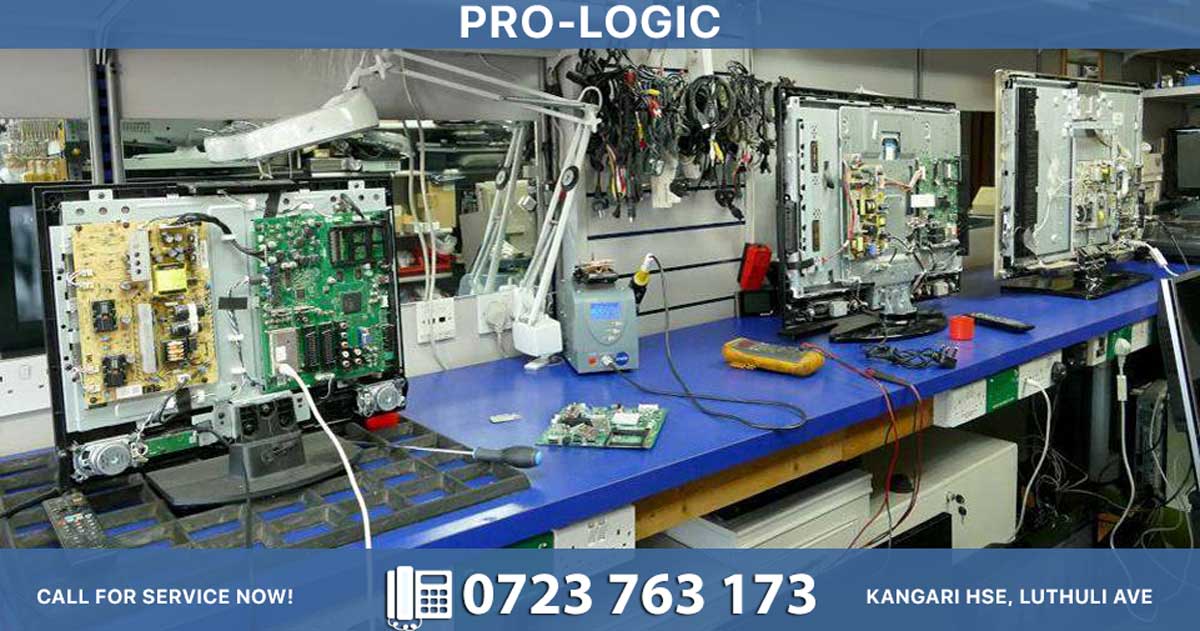
Modern televisions are expensive investments, and like any electronic device, they rarely die without warning. Learning to recognize the early symptoms of a failing TV can save you from a sudden blackout — and help you decide whether to repair, replace, or simply prepare. Below, each of the fifty warning signs is briefly explained.
Display and Picture Problems
1. Flickering screen — Intermittent flashing often signals a failing backlight, loose internal cable, or degrading power supply. Occasional flickers may be minor, but frequent ones usually worsen over time.
2. Vertical or horizontal lines — Persistent lines across the screen typically indicate a failing display panel or damaged ribbon cable connecting the panel to the mainboard. Panel issues are often costly to repair.
3. Discolored patches or spots — Uneven coloring can mean the LCD panel is degrading or the backlight diffusion layers are breaking down, creating yellow, green, or gray blotches.
4. Dying pixels — Small black or stuck-colored dots are individual pixels that have failed. A few are cosmetic; a growing cluster means the panel is deteriorating.
5. Image retention / burn-in — Ghostly outlines of logos or menus that linger on screen suggest the display cells are wearing unevenly — common in older plasmas and heavily used OLEDs.
6. Slow power-on — If your TV takes minutes to display a picture, capacitors in the power supply may be weakening. This symptom typically progresses to complete failure.
7. Channel-change delay — Increasing lag when switching inputs or channels can indicate the processor or memory is struggling, sometimes due to failing internal components or degraded firmware performance.
8. Random shutdowns — A TV that turns itself off is often overheating or has a failing power supply board that momentarily cuts out under load.
9. Inconsistent power-up — Needing multiple attempts to turn on suggests worn capacitors or a failing power button circuit — a classic pre-failure symptom.
10. Distorted or warped images — Wavy, stretched, or bent pictures point to failing video processing hardware or a degrading panel.
Color and Brightness Issues
11. Washed-out colors — Gradually fading color often means the backlight is dimming or the panel's color filters are aging.
12. Oversaturated or wrong colors — Unnatural reds or greens can indicate failing video processing chips or damaged display drivers.
13. Double images or ghosting — Duplicated, trailing images suggest signal processing failures or degrading display response, sometimes caused by failing internal boards.
14. Flashing backlight — A backlight that strobes or pulses indicates the LED strips or the driver circuit powering them are failing.
15. Dark corners — Shadowing in screen corners typically means the backlight's edge-lit LEDs are dying unevenly — a common failure in LED TVs.
16. Clouding or brightness uniformity issues — Cloudy, flashlight-like glow behind dark scenes reveals aging diffusion layers or weakening backlight arrays.
17. Self-dimming — A screen that randomly darkens may have a thermal sensor triggering protection mode, or a backlight struggling to maintain output.
18. Blooming around bright objects — Halos around bright content on local-dimming sets can worsen as the dimming zones or LEDs degrade.
Sound Problems
19. Buzzing or humming — A constant low hum usually comes from a failing power supply transformer or loose internal components vibrating at the electrical frequency.
20. Clicking on power-up — Repeated clicking when turning on the TV is the sound of the power supply attempting (and failing) to start — often caused by blown capacitors.
21. High-pitched whining — Coil whine from stressed inductors or transformers is annoying and often precedes power board failure.
22. Popping sounds — A sharp pop from inside frequently means a capacitor or component has just failed — treat it as an urgent warning.
23. Speaker crackle — Crackling audio may simply be blown speakers, but it can also indicate a failing audio amplifier board.
24. Intermittent audio cutouts — Sound that drops in and out points to loose internal connections or a failing audio processing circuit.
25. No sound with normal picture — Complete audio loss with a working image usually means the audio amplifier or output stage has failed.
Connectivity and Smart Features
26. Dead HDMI or USB ports — Ports that stop recognizing devices may have damaged connectors, but multiple failing ports suggest mainboard trouble.
27. Wi-Fi failures — Persistent connectivity loss can stem from a failing internal Wi-Fi module — annoying, but also a sign of aging electronics.
28. Constant app crashes — Smart TV apps that repeatedly freeze or crash may indicate the TV's memory or storage is degrading.
29. Frozen menus — A UI that locks up frequently suggests the processor or internal memory is struggling, especially if the problem worsens over time.
Power and Thermal Problems
30. Overheating — Excessive heat accelerates every other failure. Blocked vents, dust buildup, or a stressed power supply are common culprits.
31. Burning smell — An acrid, burning odor means something is literally overheating or shorting. Unplug the TV immediately — this is a fire risk.
32. Chemical or plastic odor — A sweet or chemical smell can indicate overheating insulation or circuit boards off-gassing under stress.
33. Static shocks from the frame — Feeling shocks from the TV's exterior suggests failing insulation or grounding — a serious electrical hazard.
34. Internal condensation — Moisture inside the screen means seals have failed, inviting corrosion that will steadily damage the electronics.
Behavioral Abnormalities
35. Random restarts — A TV that reboots itself has power supply or firmware instability that typically worsens.
36. Abnormal standby light behavior — A blinking, dim, or absent standby LED often encodes fault codes — the TV is literally telling you something is wrong.
37. Picture jitter or shaking — A trembling image suggests failing video processing or unstable power delivery to the panel.
38. Vertical picture roll — Rolling or scrolling images point to failing sync processing, often a precursor to total video failure.
39. Unexplained signal loss — Intermittent "no signal" messages with unchanged cables may indicate failing input boards or tuners.
40. Random color bars — Test patterns or color bars appearing spontaneously indicate the mainboard is losing its grip on the panel.
Physical and Age-Related Signs
41. Bulging capacitors (slow boot, clicking) — Swollen capacitors are the most common TV failure. Symptoms include slow starts, clicking, and shutdowns.
42. Rapid screen heating — A screen that gets hot unusually fast suggests increased internal resistance — components working harder as they degrade.
43. Loud fan noise — In fan-cooled models, a whirring or rattling fan means cooling is compromised, putting all components at risk.
44. Progressive quality degradation — A slow, months-long decline in picture quality is the most reliable sign that multiple components are aging together.
45. Unresponsive screen zones — Areas that don't display properly indicate panel-level failure, which usually spreads.
46. Dead zones — Entire sections of black screen mean the panel or its drivers have partially failed — often beyond economical repair.
47. Dust-clogged vents — Heavy dust buildup isn't a fault itself, but it causes overheating that triggers many failures above.
48. Spreading dead pixel clusters — Pixel problems that grow row by row indicate the panel's driver connections are failing systematically.
49. Age over 8–10 years — Even without symptoms, TVs past a decade old face exponentially higher failure risk as capacitors, backlights, and boards reach end of life.
50. The combination effect — One symptom is a warning; three or more together mean failure is imminent. Multiple issues usually share a root cause — a dying power board — and signal it's time to act.
Not every symptom means doom: some, like loose cables or blown speakers, are cheap fixes. But persistent or worsening signs — especially smells, sounds, and power problems — deserve immediate attention. Unplug a TV that smells of burning, back up your settings, and weigh repair costs (often 200–200–400 for board replacements) against replacement. Catching these warnings early turns a crisis into a planned decision.